Smooth Is a Warning Sign: The Case Against Polishing Your Art Into Oblivion
Somewhere along the line, 'professional' became a compliment for artists. That's where everything went sideways.
We started treating production value like a virtue. We started confusing aesthetic cleanliness with quality. We started believing that if something sounded crisp, looked polished, and moved through the world without catching on anything — it was good. Maybe even great. And in doing so, we quietly murdered a whole generation of interesting work before it ever got the chance to breathe.
Here's what nobody in the industry wants to say out loud: smooth is a warning sign. When something is too clean, too professional, too carefully constructed to offend nobody — it usually means someone along the way made a decision to sand off every single thing that made it worth caring about.
The Refinement Trap
The cult of refinement is seductive. It makes sense on paper. You want to be taken seriously. You want the big platforms, the press coverage, the booking agents who return your emails. And all of those gatekeepers speak the same language — a language of polish, presentation, and palatability.
So you invest in the good microphone. You hire the retoucher. You reshoot the video because the lighting was slightly off. You rewrite the caption seventeen times until it sounds effortless. You go back into the studio and redo the vocals because there was a little catch in your voice on the second verse — a little crack that sounded, honestly, like something real.
And you sand it off. Because it wasn't clean.
That crack was the whole song. You just didn't know it yet.
The refinement trap tells you that audiences want a finished product. What it doesn't tell you is that a finished product is often a dead one. There's no room left for the listener, the viewer, the fan — no rough edge for them to grab onto, no imperfection to project themselves into, no humanity left exposed.
The Cult Figures Who Never Bothered
Let's talk about the artists who built devoted, obsessive, decades-long followings by refusing to play the polish game.
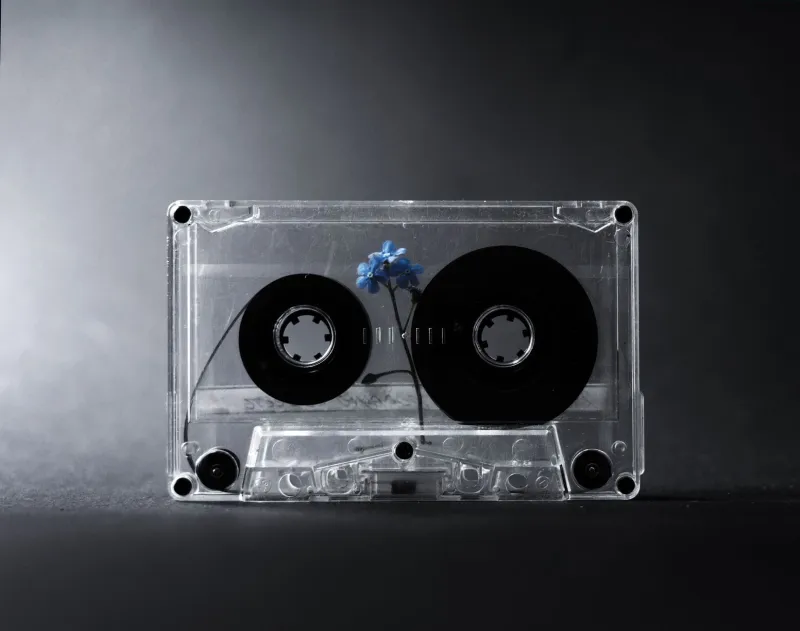
Daniel Johnston recorded his earliest cassettes on a cheap boom box in his parents' basement. The fidelity was terrible. The production was nonexistent. The vocals were raw in a way that made some people deeply uncomfortable. Kurt Cobain wore a Daniel Johnston t-shirt on the cover of Sassy magazine and helped turn a lo-fi outsider into a cult icon. Why? Because you couldn't hear those recordings without feeling like someone had cracked open their chest and handed you the contents. No amount of studio time could replicate that.
GG Allin is an extreme case, sure — but the chaos, the confrontation, the utter refusal to be contained by any industry standard is exactly why people are still talking about him decades after his death. Nobody built a legacy out of agreeing to be packaged.
Think about early Lana Del Rey — before the machinery really kicked in, there were those grainy YouTube videos, that wobbly, haunted vocal delivery, the whole vibe of something that felt half-finished and completely alive. The internet went feral over it. By the time the major label era smoothed things out, some of that initial electricity had already dissipated.
Or look at the entire underground rap scene — the artists who built real movements in basements and on SoundCloud with blown-out 808s and vocals recorded through phone mics. The roughness wasn't a limitation. It was the aesthetic. It was the identity. It was the proof that this came from somewhere real.
What Polish Actually Signals
When you over-refine your work, you're not just changing the sound or the look. You're sending a message. And that message is: I was more afraid of being judged than I was committed to being honest.
Audiences feel that. Maybe not consciously, but they feel it. There's a reason why the most technically perfect pop albums of any given year are usually forgotten within eighteen months, while some scratchy demo recorded in a car or a bathroom becomes a touchstone that people reference for the next decade.
Perfection signals safety. And safety is boring. Safety doesn't build cults — it builds consumers.
The artists who create devoted followers are the ones who make work that feels like it could have gone wrong at any moment. The ones who leave the tension in. Who don't cut away the weird pause or the off-key moment or the line that makes you genuinely unsure if you should be uncomfortable. That uncertainty is the electricity. That's what makes people come back.
The Industry Will Always Lie to You About This
Here's the thing about the refinement cult — it's not neutral. It has stakeholders. Record labels, brand partners, streaming algorithm designers, PR firms — all of them benefit from art that's been smoothed into something predictable and manageable. Rough edges are harder to monetize cleanly. Chaos doesn't fit neatly into a content calendar.
So the industry will keep telling you to invest in better equipment, to hire better producers, to present a more 'cohesive aesthetic.' And some of that advice has merit. But a lot of it is just pressure to become easier to sell — which usually means harder to love.
The artists who last are the ones who figured out the difference between developing their craft and submitting to a homogenization machine. Those are not the same thing.
Keep the Damage
This isn't a call to be deliberately sloppy or to romanticize incompetence. Skill matters. Intention matters. But there's a massive difference between craft and polish — and confusing the two is costing artists everything.
Craft means knowing why you're making the choices you're making. Polish means making choices based on what's least likely to be criticized.
You can be technically skilled and still leave the rough edges intact. You can know exactly what you're doing and still choose to keep the crack in the vocal, the grain in the photo, the uncomfortable pause in the video. Not because you couldn't fix it — but because fixing it would be a lie.
The most interesting work you will ever make is probably the stuff that scares you a little. The stuff that feels unfinished, exposed, maybe even embarrassing. The stuff that doesn't quite fit the aesthetic you've been carefully building.
That's the work that sticks. That's the work that makes someone feel less alone at 2am. That's the work people tattoo on their bodies and quote in their bios and play at their own funerals.
Keep the damage. It's the only part of you they can actually hold onto.