Stop Explaining the Magic: How Radical Transparency Is Quietly Gutting Your Aura
Somewhere along the way, the creative world decided that the most dangerous thing an artist could be was unknowable. Vulnerability became currency. Behind-the-scenes content became the product. And the messy draft, the tearful voice memo, the "I almost quit" confession — all of it got repackaged as intimacy, sold as authenticity, and consumed like fast food by audiences who've been trained to expect access as a birthright.
And the artists doing it? They think they're connecting. They think transparency is power. They are wrong.
The Illusion of Closeness
Here's what nobody in the content strategy world wants to admit: there's a fundamental difference between feeling close to someone and actually respecting them. Oversharing collapses that gap in the worst possible direction. When you show every crack in the foundation — every moment of doubt, every abandoned idea, every 2 a.m. spiral — you're not building a relationship. You're building a support group. And support groups don't produce devotion. They produce familiarity, and familiarity is the enemy of obsession.
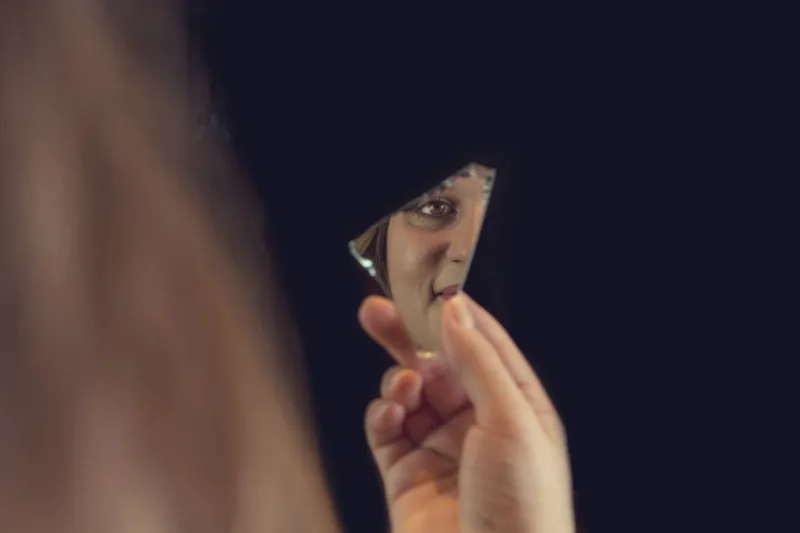
Think about the artists who genuinely haunt people. The ones who become mythology while they're still alive. They are not the ones posting studio vlogs. They are not the ones narrating their creative insecurities over lo-fi beats on TikTok. They're the ones who give you the finished thing and let you go insane trying to figure out how it happened. The distance is the point. The withholding is deliberate. The mystery isn't accidental — it's architecture.
Demystification Is a One-Way Door
You can always give people more access. You cannot take back what you've already shown them. Once you've walked your audience through every iteration of your process — every rejected concept, every moment you second-guessed yourself — you've handed them a map to the inside of your head. And maps kill wonder. Nobody stands at the edge of the Grand Canyon and feels the same thing after they've read a geological pamphlet explaining exactly how erosion works over millions of years. The explanation doesn't add to the experience. It replaces it.
That's what's happening to a generation of artists right now. They're handing out pamphlets. They're explaining the erosion. And audiences, being human, are consuming the explanation and moving on — because once something is understood, it stops being magnetic. It becomes trivia.
The creative process, when it's genuinely wild and genuinely yours, is not supposed to be legible. It's not supposed to be a tutorial. The fact that you can't fully explain how a piece came together isn't a weakness to confess — it's a signal that something real happened. Protect that. Guard it like it matters, because it does.
The Vulnerability Industrial Complex
Let's name the machine that's running this whole operation: the vulnerability industrial complex. It's the ecosystem of platforms, coaches, and content frameworks that have convinced artists that emotional exposure equals audience loyalty. Post the breakdown. Share the rejection email. Show the before-and-after of your confidence. Be brave enough to be a mess in public.
And look — there's nothing inherently wrong with being human. There's nothing wrong with acknowledging that creation is brutal and uncertain. But there is something deeply wrong with mistaking performance of vulnerability for actual power. When vulnerability becomes a content strategy, it stops being vulnerability. It becomes a product. And products get consumed, reviewed, and discarded.
The artists who've built genuine cult followings — the ones with audiences that border on religious — aren't the ones who performed their insecurity the loudest. They're the ones who made you feel like you were glimpsing something you weren't supposed to see. There's a difference between chosen disclosure and compulsive oversharing. One is a controlled burn. The other is just burning.
Strategic Opacity Is Not Aloofness
Before anyone misreads this as a manifesto for being cold, distant, or deliberately difficult — let's be precise. Strategic opacity isn't about being a jerk. It's not about pretending you're above the work or treating your audience like they don't matter. It's about understanding that what you don't say has weight. What you don't show creates space. And space is where imagination lives.
When you leave gaps, people fill them. They project. They theorize. They invest. That investment is the foundation of a devoted following — not the polished Q&A where you explain your influences, not the Patreon tier where you share your mood boards, not the Discord where you answer questions in real time. Those things have their place, but they should never be confused with the thing that actually makes people obsessed with you: the feeling that there is more to discover.
The most powerful move you can make right now, in an environment where everyone is screaming for attention by giving everything away, is to curate ruthlessly. Decide what serves the work and what serves the algorithm. Decide what builds intrigue and what just fills a content calendar. Those are not the same thing, and treating them like they are is how you slowly sand down the edges that made you interesting in the first place.
What Gets Protected Gets Powerful
There's a reason certain creative figures feel genuinely mythic even in an era when privacy is practically extinct. It's not luck. It's not that they're hiding dark secrets. It's that they've understood something the content machine doesn't want you to know: protection creates value. What you refuse to show becomes the thing people most want to see.
Your process, at its most alive and ungovernable, is yours. The part of it that nobody can fully see is the part nobody can replicate, copy, or explain away. That's where your actual power lives — not in the explainer video, not in the vulnerability thread, not in the documentary-style breakdown of how you made the thing.
The magic is not the content. The magic is what survives after you stop explaining it.
So stop explaining it. Let them wonder. Let them work for it. Let the distance do what distance has always done for the artists who understood its value — make you impossible to shake, impossible to fully grasp, and absolutely impossible to forget.