Uncategorizable and Unstoppable: Why Breaking the Algorithm Is Your Greatest Career Move

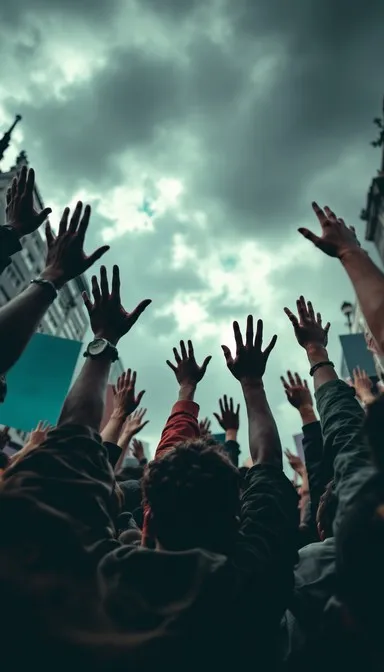
Photo by Photo by Egor Komarov on Unsplash on Unsplash
Somewhere in a server farm, a machine is sweating right now trying to figure out what to do with you.
It's scanning your output. Cross-referencing your audience. Looking for a neat little shelf to slide you onto so it can serve you up to the people most likely to click, stream, share, and convert. And it's coming up empty. The genre doesn't quite fit. The audience demographic skews weird. The tone shifts too much. The work refuses to sit still long enough to be catalogued.
Good. That machine's confusion is your competitive advantage.
The System Was Built for Predictability — You Weren't
Here's what nobody tells you when you're starting out: recommendation algorithms aren't designed to find the most interesting creators. They're designed to find the most predictable ones. The ones who make the same thing, for the same people, in the same format, on the same schedule. Consistency is crack cocaine for a machine learning model. It loves patterns. It rewards repetition.
Which means the entire infrastructure of modern content discovery is quietly, systematically hostile to anyone doing something genuinely new.
Think about that for a second. The tools we've been told will help us grow our audiences are actually optimized to suppress the most original work being made. Spotify's Discover Weekly doesn't know what to do with an artist who blurs the line between noise music and gospel. TikTok's For You Page fumbles when a creator's content swings between absurdist comedy and unflinching personal essay. YouTube's recommendation engine gets genuinely confused by channels that don't stay in their lane.
And here's the dirty irony: those are exactly the creators worth following.
Confusion Is a Form of Attention
When something breaks your pattern recognition, you don't scroll past it. You stop. You look again. You try to figure out what you're actually looking at.
That moment of friction — that tiny cognitive stumble — is more valuable than any frictionless feed scroll. Because friction creates memory. You remember the thing that confused you far longer than you remember the tenth version of the thing you already understood.
The creators who built genuinely cult audiences — and I mean cult in the best possible sense, the kind of devotion that outlasts any single platform — almost always have this quality of productive confusion baked into their work. David Lynch didn't make movies you could easily summarize. Prince didn't fit into rock or R&B or pop, so radio stations genuinely didn't know what bin to file him under. Björk has spent thirty years being the artist that critics describe with increasingly desperate compound adjectives. Experimental-art-pop-electronic-avant-garde-chamber-whatever.
None of them were algorithm-friendly. All of them built audiences that are ferociously, irrationally loyal in a way that purely algorithmic success never quite replicates.
The Loyalty That Algorithms Can't Manufacture
When someone finds you through an algorithm, the relationship starts transactional. The machine decided you were statistically similar enough to something they already liked. You're a recommendation. You're adjacent.
When someone finds you despite the algorithm — when they dig you up through word of mouth, or stumble onto you through some weird corner of the internet, or hear about you from the one friend who always knows about the strange stuff first — that discovery feels like theirs. They found you. They claimed you. You became part of their identity in a way that algorithmic delivery just doesn't create.
And when those people talk about you? They don't say "I saw it on my For You Page." They say "you have to hear this, I don't even know how to explain it, just trust me."
That word-of-mouth heat is the thing platforms have been trying to engineer and bottle since the beginning of social media. They can't. It only comes from work that genuinely surprises people, and genuine surprise is inherently resistant to systematization.
Stop Trying to Teach the Machine to Love You
There's a whole cottage industry of advice built around gaming algorithms. Post at this time. Use these hashtags. Keep your videos between this length and that length. Use a hook in the first three seconds. Mirror trending audio. Optimize your thumbnail for click-through rate.
Some of that advice is tactically fine. None of it is a creative strategy.
The moment you start making work with the algorithm as your primary audience, you've already lost something you're not going to get back easily. Because the algorithm doesn't care about the work. It cares about the behavior the work produces. And optimizing for behavior rather than resonance is how you end up making content that performs and means nothing.
The artists I find most compelling — and I'd bet the ones you find most compelling too — are the ones who seem genuinely indifferent to whether they're easy to categorize. Not indifferent to whether their work connects; they care deeply about that. But indifferent to whether a machine can file them neatly.
That indifference reads as confidence. And confidence, weirdly, is one of the most attractive qualities a creator can project.
Being Unclassifiable Is a Long Game
I'm not going to pretend this path is frictionless. It isn't. You'll have slower growth periods. You'll watch creators who make simpler, more consistent, more algorithmically legible work rack up numbers that dwarf yours. That's going to sting sometimes.
But here's what the numbers don't show: audience churn. The creator with ten million followers who built that audience entirely through algorithmic optimization is one platform change, one viral moment drought, one trend cycle away from losing half of it. Their audience followed the algorithm's recommendation, not a person. When the algorithm stops recommending, the audience stops following.
The audience built around an uncategorizable creator? They followed you. The specific, weird, hard-to-describe thing that you are. They can't get that anywhere else, because nobody else is doing exactly what you do. That's not a niche. That's a monopoly.
The Algorithm Is a Map. You're the Territory.
Maps are useful. But the map is not the territory. The algorithm is a map of existing taste, existing patterns, existing behavior. It can only ever show people more of what they already know they like.
You are the territory. You are the place the map hasn't charted yet.
The most interesting work being made right now exists in the gaps between categories — in the spaces the algorithm genuinely doesn't know how to navigate. And the people brave enough to make that work, to stay weird and refuse to flatten themselves into something classifiable, are building something the machine can never replicate or kill.
So let it be confused. Let it fumble. Let it serve you up to the wrong audience seventeen times before it accidentally finds your people.
Your people will know you when they find you. That's the whole point.