Your Biggest Fans Are Holding You Hostage
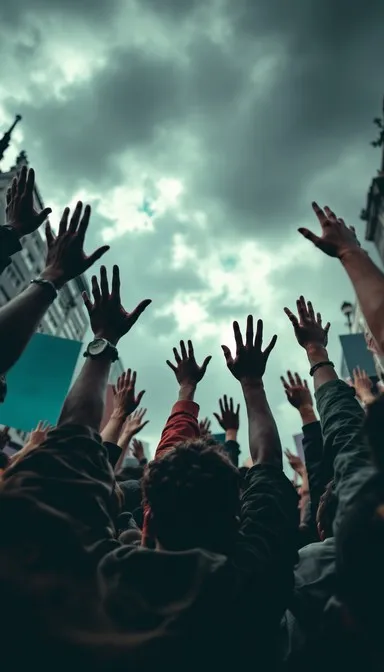
Photo: artist breaking free from crowd pulling hands dark dramatic, via images.stockcake.com
There's a moment every artist hits — usually somewhere between the second and third era of their career — where they realize something deeply uncomfortable: the people cheering the loudest in the crowd are also the ones most likely to drag them backward.
Not out of malice. That's the cruel part. Out of love.
Your earliest supporters found you when you were raw, specific, maybe even a little rough around the edges. They told their friends. They built the early momentum. And in doing so, they quietly filed a claim on who you are. Not officially. Not consciously. But the claim is real, and the day you try to evolve past the version of yourself they fell for, you'll feel the full weight of it.
Welcome to the comfort trap.
The Love That Locks You In
Let's be clear about what's actually happening here, because it's easy to misread this dynamic as ingratitude or ego. It's neither.
When a fan discovers an artist early, it becomes part of their identity. They're not just a listener or a viewer — they're a finder. They spotted something before the masses did, and that discovery story belongs to them now. When you change, you're not just evolving your art. You're retroactively editing their origin story. And people do not take kindly to having their personal mythology rewritten.
This is why the backlash to creative evolution is almost always loudest from the most devoted corners of a fanbase. Casual fans shrug and move on. The hardcore ones? They feel personally betrayed.
That feeling is real. It just isn't your problem to solve.
What Radiohead Understood That Most Artists Never Do
Let's talk about Kid A.
In 2000, Radiohead dropped an album that their existing fanbase — built on the alternative rock anthems of The Bends and the critically worshipped OK Computer — largely did not know what to do with. It was cold, electronic, dissonant, and deliberately difficult. Fan forums lit up with confusion and rejection. Early reviews were split. The band had just released what many considered a modern masterpiece with OK Computer, and instead of delivering the obvious follow-up, they burned the template down.
Kid A is now widely considered one of the greatest albums ever made.
The fans who needed Radiohead to stay the same lost. The band won. More importantly, the art won.
This isn't a one-off. Dylan going electric. Bowie inventing and then abandoning Ziggy Stardust. Kendrick Lamar following up good kid, m.A.A.d city with the abstract chaos of To Pimp a Butterfly. Taylor Swift dismantling her country identity to go full pop, then torching that identity to go indie folk with folklore. Every single one of these pivots came with a wave of fan revolt. Every single one of them ended up expanding both the artist's reach and their legacy.
The pattern is consistent enough to be a rule: the evolution that scares your existing audience is usually the one that opens the door to a much bigger room.
The Business Pressure Is Real — And It's a Trap
Here's where it gets complicated, because this isn't just an emotional or artistic issue. There's actual money involved.
Labels, managers, agents — the entire machine around a commercially successful artist — is built to replicate whatever worked last time. You had a breakout record? Great. Make another one that sounds like it. Your fanbase responds to a specific aesthetic? Protect that aesthetic at all costs. The incentive structures of the entertainment industry are almost perfectly designed to punish artistic risk.
And when you're the one paying rent, the pressure to give the people what they already want is not abstract. It is immediate and loud and sitting in your inbox.
But here's what the machine doesn't tell you: giving an audience exactly what they expect is a slow death. You might sustain a career for a while doing it. You will not build a legacy. Legacy requires surprise. It requires the audience to occasionally not know what hit them.
The artists who play it safe for their fans end up trapped in nostalgia tours and greatest hits packages, performing the same songs to an aging audience that peaked in their enthusiasm two decades ago. That is not a career. That is a museum exhibit.
How to Know When It's Time to Break the Contract
None of this means you should change for the sake of changing. Chaos without intention is just noise — and we'll get to that distinction another time. The question isn't whether to evolve; it's whether you're doing it because you genuinely need to, or because you're bored and want attention.
Ask yourself this: Are you holding something back because you're not ready, or because you're afraid of how your audience will react? Those are very different situations with very different answers.
If it's the former, take the time you need. If it's the latter — if you're censoring your own growth out of loyalty to a version of yourself that no longer fits — then the fans have already won in the worst possible way. They haven't just claimed a piece of your past. They've colonized your future.
The Permission You're Waiting For
You don't owe your audience a static version of yourself. You owe them your actual work — whatever form that takes at any given moment in your life.
The fans who are meant to follow you into the next era will follow. Some of them will need time. Some of them will come back years later and admit they didn't get it at first. And some of them will leave, and that's okay too. An audience that only loves you when you're predictable was never really in love with you — they were in love with the comfort of knowing what to expect.
You are not a comfort object.
The trap looks like loyalty. It feels like love. But at its core, it's a demand that you stop growing — and no amount of early support entitles anyone to that.
Grow anyway. Lose the ones who can't handle it. Build something that surprises even you.
That's the only version of this worth doing.