Nice Gets You Nowhere: The Polarization Principle Behind Every Cult Artist
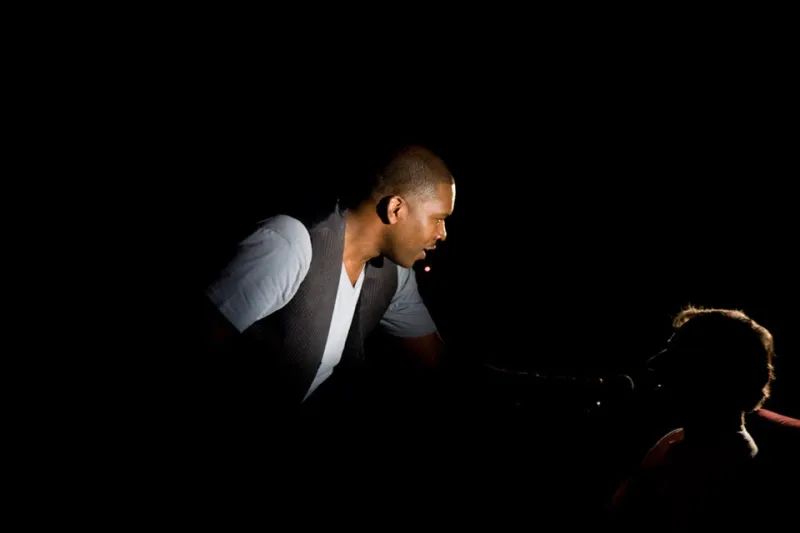
Photo: U.S. Army, CC BY 2.0, via Wikimedia Commons
Somewhere along the line, "likable" became the goal. Not powerful. Not unforgettable. Not the kind of artist that makes someone pull over their car because a song just hit them somewhere inconvenient. Just... likable. Palatable. Broadly acceptable to the widest possible demographic slice.
And that's exactly how you end up with a mediocre career and a fanbase that forgets your name by Tuesday.
The Algorithm Made You Soft
Let's be honest about where this came from. The social media era handed creators a real-time scoreboard — likes, shares, follower counts ticking up or down in response to every single thing you put out. That feedback loop rewired a lot of people. You start chasing the metric instead of chasing the thing that made you want to create in the first place.
The platforms didn't invent the pressure to be universally appealing, but they weaponized it. Suddenly you could see the moment you lost someone. A dip in engagement after a weird post. A comment that says "this isn't why I followed you." And the natural human response is to sand down the edges, soften the delivery, hedge the opinion.
Over time, you stop being an artist and start being a content product optimized for minimal friction. Congratulations — you're now the creative equivalent of a beige wall.
The Math Nobody Wants to Talk About
Here's the counterintuitive part, and it's worth sitting with: being actively disliked by a large number of people is not the opposite of success. In many cases, it's the engine of it.
Think about the artists who've built genuinely devoted followings — the kind where fans get tattoos, drive six hours to a show, evangelize your work to strangers. Marilyn Manson in the '90s. Nicki Minaj's early run. Tyler, the Creator before the mainstream caught up to him. Die Antwoord. Lana Del Rey when critics were sharpening their knives. These weren't universally loved artists. They were polarizing — which meant that for every person who turned them off in disgust, there was someone else who felt, for the first time, like they'd finally found their people.
That's the math nobody teaches in any creator course or branding workshop: a smaller, more intense signal travels further than a louder, diluted one.
Repulsion Is a Feature
When someone hates your work loudly, they're doing your marketing for you. Every person who rage-posts about how they can't stand what you're doing is broadcasting your name to their entire network. Some percentage of those people are going to get curious. Some of those curious people are going to become your most loyal fans, precisely because they were told not to be.
There is a whole category of human being — and I'd argue the most interesting ones — who hear "you shouldn't like this" and immediately need to know more. You want those people. They don't come from trying to please everyone. They come from drawing a hard line and daring someone to cross it.
The cult following isn't built from the middle of the audience. It's built from the edges.
What "Likable" Actually Costs You
When you optimize for likability, you're not just softening your aesthetic — you're erasing the specific, weird, particular thing that only you bring. You're filing down the fingerprint.
Every time you rewrite a lyric to be less abrasive, tone down a visual to be less unsettling, or preface an opinion with seventeen qualifiers so nobody gets the wrong idea — you're making a choice. You're choosing the comfort of a stranger over the authenticity of your own voice. Do that enough times and you'll look up one day and not recognize what you're making anymore.
And your audience — the real one, the devoted one — they'll notice before you do. They came for the specific frequency you were broadcasting. The moment you start drifting toward the center, you lose the signal.
Stop Auditioning for People Who Don't Want You
This is the part that stings a little, so stay with me: the people you're softening yourself for are not your people. They were never going to be. You can contort yourself into the most agreeable, inoffensive, broadly appealing version of yourself and they will still scroll past you. Because what they're looking for is something else entirely, and that's fine — that's their right.
But while you're busy auditioning for them, the people who would have gone absolutely feral for your real work are sitting somewhere wondering why nothing out there speaks to them.
Your job is not to minimize the number of people who dislike you. Your job is to maximize the intensity of connection with the people who get it. Those are completely different projects, and you can only do one at a time.
The Chaos Is the Point
Cult followings are not built on consensus. They're built on conviction — the sense that this artist believes something so completely that they're willing to lose people over it. That kind of commitment is magnetic to the right audience and repellent to everyone else. Both of those outcomes are correct. Both of them are working exactly as intended.
So stop trying to make everyone comfortable. Stop rounding off the sharp corners of what you do. The people worth keeping don't want the smoothed-out version — they want the thing with teeth.
Being liked by everyone is a participation trophy. A cult following is something you earn by being willing to be genuinely, unapologetically yourself — and letting the people who can't handle it walk out the door.
Let them go. The room gets better when they leave.