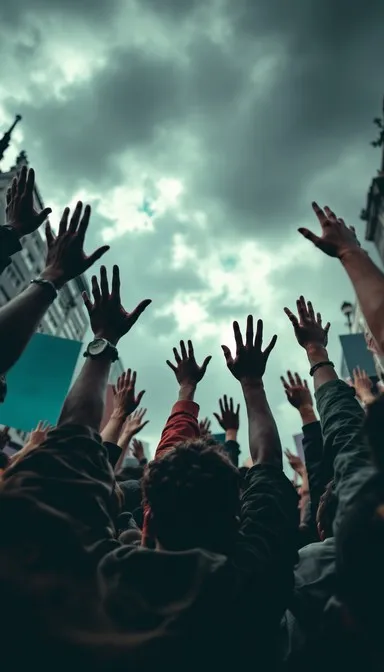
Stop Trying to Be Loved. Start Being Impossible to Forget.
Likeability is a participation trophy. It's handed out freely, means almost nothing, and collects dust on a shelf nobody visits. The artists who actually changed something — who cracked culture open and rearranged the furniture — weren't optimizing for your approval. They were building cathedrals to their own obsessions, and daring you to walk inside.
There's a distinction that most people in creative spaces refuse to sit with because it's uncomfortable: the difference between being liked and being remembered. These two things are not the same. In fact, a lot of the time, they're actively at war with each other.
The Approval Machine Is a Trap With a Smile on Its Face
Here's what the approval machine looks like in 2025: you post something, you watch the numbers, you adjust. You soften an edge here, broaden an appeal there, swap out something weird for something more digestible. You tell yourself you're "growing" or "evolving," but what you're actually doing is filing down your teeth so nobody gets scared when you open your mouth.
And the brutal irony? The more you chase universal approval, the more invisible you become. Because likeable content is, by definition, inoffensive. And inoffensive things don't lodge themselves in anyone's brain. They don't keep people up at night. They don't make anyone feel like they finally found the thing that was made specifically for them.
Popularity is wide but shallow. Reverence is narrow but bottomless. You can have a million casual fans who forget your name by Tuesday, or you can have ten thousand people who would genuinely rearrange their lives around your next release. One of those things builds a career. The other builds a vanity metric.
What Devotion Actually Looks Like
Think about the artists who have inspired the kind of devotion that borders on religious. David Bowie didn't ask permission to become Ziggy Stardust. Nina Simone didn't modulate her politics to make white mainstream audiences more comfortable. Kendrick Lamar didn't soften To Pimp a Butterfly because it was too dense, too angry, too much. Prince built an entire mythology around the refusal to be categorized, and people lost their minds trying to get close to whatever he was.
None of these people were universally loved. All of them were universally felt.
That's the thing about reverence — it's not warm and fuzzy. It's electric. It's the feeling you get when something cuts through all the noise and lands directly on the part of you that doesn't have words yet. You don't like that feeling the way you like a good sandwich. You carry it around. You become evangelical about it. You press it into the hands of people you care about and say, you have to experience this.
Liked things get thumbs up. Revered things get altars.
The Psychology of Being Too Much
There's a reason the most devoted fanbases in history have always formed around artists who made at least somebody uncomfortable. Discomfort is a sorting mechanism. It tells the people who are truly your people that they've arrived somewhere real — somewhere that isn't trying to accommodate everyone, which means it actually belongs to them.
When you're willing to be too much — too weird, too political, too dark, too loud, too specific — you're essentially drawing a line in the sand. And the people who step over that line aren't casual observers. They're converts. They chose you specifically because you weren't trying to be chosen by everyone.
The psychology here isn't complicated. Humans are tribal. We want to belong to something that feels exclusive, even if that exclusivity is just aesthetic or ideological. A band that everyone tolerates is nobody's religion. A band that half the room hates? That's the band the other half gets tattooed on their bodies.
Middle-ground art doesn't inspire that. Middle-ground art is fine. Fine is the death of legacy.
Legacy Is Built in the Friction
Here's a question worth sitting with: what do you actually want? Not right now, not this quarter, not in terms of this month's engagement rate. What do you want the shape of your creative life to look like when you're looking back at it?
Because if the answer is I want to have made something that mattered — and I mean genuinely mattered, not just performed well on a platform — then the approval machine has to go. Or at least, it has to stop being the metric you're optimizing for.
Legacy is almost never built on consensus. It's built in the friction. It's built in the moment when you make the thing that half your audience doesn't understand yet, the thing that gets you called pretentious or alienating or just plain weird, and you release it anyway because it's the most honest thing you've ever made.
The artists who get studied, who get sampled, who get referenced in acceptance speeches decades after their peak — they weren't trying to be palatable. They were trying to be true. And truth, real truth, is almost always at least a little bit difficult to swallow.
Build the Empire Nobody Expected
So what does it actually look like to choose reverence over approval? It looks like making decisions from the inside out instead of the outside in. It looks like asking what does this need to be before you ask what will this do for my numbers. It looks like being willing to lose followers over something you actually believe in.
It looks like trusting that the right people — your people — will find you if you stop camouflaging yourself to appeal to everyone.
This isn't about being deliberately difficult or manufacturing controversy for its own sake. That's a different trap, and it's just as hollow as chasing likes. This is about the quiet, terrifying act of committing fully to your own vision without constantly checking whether the room approves.
Empires built on approval collapse the moment the approval dries up. Empires built on reverence outlast their founders.
Bowie is still selling records. Prince is still everywhere. The artists who refused to be liked on anyone else's terms are the ones we're still talking about.
You don't have to be liked. You have to be undeniable.
The rest is just noise.