The Opinion You're Too Scared to Post Is the One That Will Define You
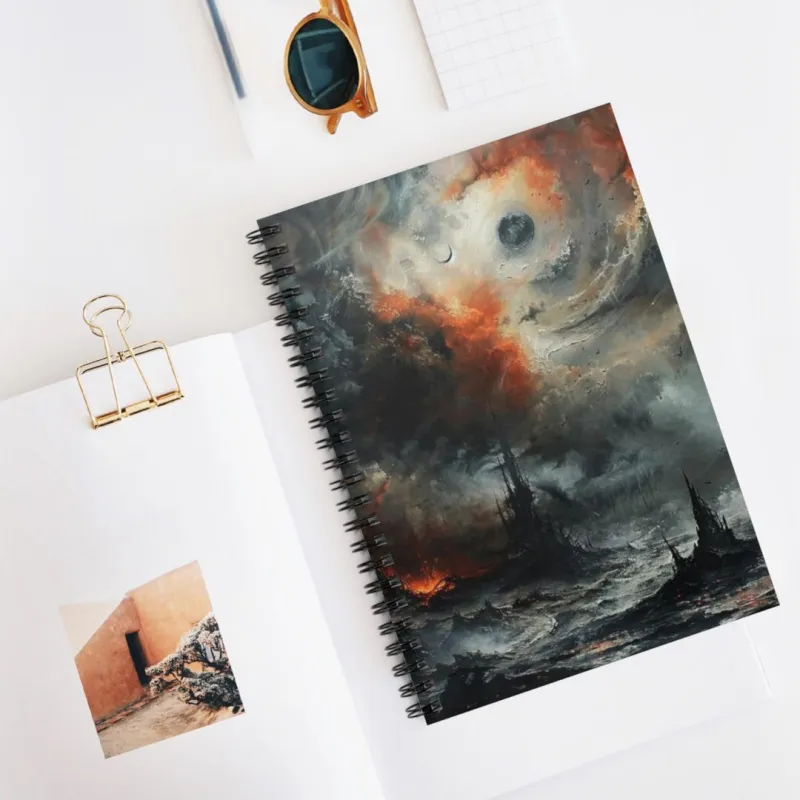
Photo: artist writing journal notebook moody dark creative space, via i.etsystatic.com
You know the feeling. You're in the middle of writing something — a post, a song, a piece of work — and something comes out that surprises even you. It's a little too honest. A little too weird. It cuts against the grain of what people expect from you, or from anyone, really. And before it even has a chance to exist in the world, you feel the impulse to smother it.
So you do. You soften it, or you cut it entirely, or you save it in a draft folder where ideas go to die quietly. And then you publish the safer version and wonder why it doesn't quite land the way you hoped.
Here's the thing: the take you killed was probably the one.
The Self-Censor Runs Before You Even Know It
Most creators don't think of themselves as self-censoring. That phrase sounds dramatic — like you're suppressing some dangerous manifesto. In reality, it's way more mundane and way more insidious than that.
It's the lyric you changed because it felt too personal. It's the essay paragraph you cut because you thought it would alienate readers. It's the artistic choice you reversed because someone in your life made a face when you described it. It happens before the work is even public — sometimes before you've consciously decided what you think about a thing.
You've built an internal committee, and that committee runs advance screenings of every idea you have. It cross-references your output against imagined reactions, projected criticisms, and the faces of people whose opinions you've given too much real estate in your head. By the time an idea makes it through that committee, it's been stripped of most of what made it interesting.
Where the Real Voice Actually Lives
Authentic creative voice doesn't live in the comfortable middle of your beliefs. It lives at the friction point — the specific place where what you actually think bumps up against what you think you're supposed to think.
That friction is information. It's telling you something. The discomfort you feel about expressing a particular idea is usually a sign that the idea is genuinely yours — not borrowed, not performed, not calculated. It hasn't been socialized into something smooth and palatable yet. It still has the original texture.
That texture is what people respond to. Not because controversy for its own sake is interesting — it mostly isn't — but because specificity is interesting. And the things you're afraid to say are almost always specific. They're specific to how you actually see the world, which is a perspective that exists exactly nowhere else.
The Artists Who Refused to Hedge
Consider the creative figures who broke through not by finding consensus but by doubling down on their strangest convictions.
Kanye West, whatever you make of him now, built his early career on the audacity of saying things that weren't supposed to be said — in interviews, in lyrics, in public moments that made publicists visibly age in real time. Whether you agreed with him was almost beside the point. The commitment to the take was the thing.
Flannery O'Connor spent her career writing grotesque, unsettling Southern Gothic fiction that made a lot of readers genuinely uncomfortable. She didn't soften it. She believed in the vision completely, and that completeness is exactly why the work has lasted decades longer than the more agreeable fiction of her era.
Odd Future — Tyler, the Creator's collective — arrived with work so abrasive that major outlets devoted actual column inches to arguing it shouldn't exist. That friction generated more attention, more curiosity, more devoted fans than any carefully engineered rollout could have.
None of these people were hedging. They were committed to the specific, strange, uncomfortable truth of what they actually believed, and that commitment is what made them impossible to ignore.
The Draft Folder Is a Graveyard
I want you to think about the ideas you've killed before they got a chance to live. Not just the ones that felt risky — the ones that felt right in a way that also felt dangerous. The ones that came out of you fast, before the internal committee could convene.
Those drafts aren't failures. They're evidence. They're proof that you have a perspective worth expressing — one specific enough to scare you, which means it's specific enough to matter to someone.
The work that sits in the graveyard of your drafts folder is often your most honest output. And the gap between that work and what you actually publish is the gap between the artist you are and the artist you're allowing yourself to be.
How to Start Digging It Out
This isn't a call to post every unfiltered thought you've ever had — that's a different problem entirely. The goal isn't chaos for chaos's sake. The goal is to stop pre-emptively killing the ideas that feel too specific, too uncomfortable, too you.
Start by noticing the impulse. When you feel the urge to soften something, pause and ask yourself what you're actually protecting. Are you protecting your audience from something genuinely harmful? Or are you protecting yourself from the discomfort of being seen clearly?
Most of the time, it's the second one.
Then ask yourself who you're imagining in the room when you make that edit. Because there is someone — some critic, some family member, some imagined mob of disapproving strangers — and that person has been sitting in your creative process rent-free for a long time. Name them. And then make the decision about whether they've earned that seat.
The Friction Is the Signal
Every artist who has built something lasting did it by following the friction rather than avoiding it. The thing that feels most dangerous to say is almost always the thing closest to your actual center of gravity — the real axis around which your work spins.
You've been treating that friction like a warning sign. It's actually a compass.
The take you're scared of, the idea you keep burying, the creative choice you keep reversing — that's not the thing that will get you in trouble. That's the thing that will get you found. By the right people. In the right way. For the right reasons.
Stop killing it before it breathes. Let the weird, spiky, inconvenient version out. It knows something you don't.