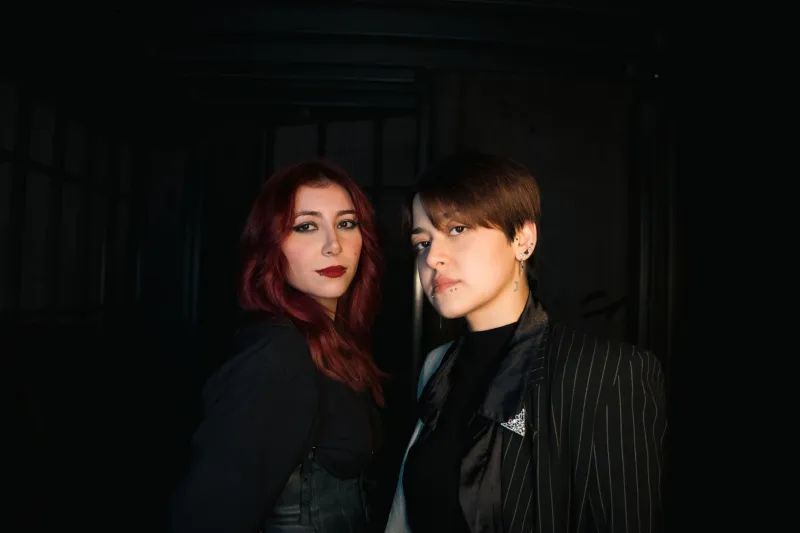
Darkroom Ethics: How to Give Your Ugliest Instincts a Press Pass
Photo: performer backstage dark mirror makeup dramatic lighting, via avecsport.com
Every artist has a drawer. In the drawer is the version of you that doesn't get invited to brunch: the spite, the vanity, the appetite, the weird sexual thing, the rage that shows up when you're tired. Most of us are taught to keep the drawer shut. Smile. Be grateful. Don't make the brand manager nervous.
Here's the problem: the drawer always leaks. The artists who last aren't the ones who pretend the drawer isn't there. They're the ones who open it, point at the contents, and say, 'Yes, and?'
The Difference Between Confession and Branding
Confession is a data dump. Branding is a signal. The internet has made confession cheap—trauma posts, Notes-app screenshots, the 4 a.m. voice memo uploaded as content. That's not shadow work. That's leakage.
Giving your shadow a public face means choosing what to show, how to show it, and what stays yours. It's the difference between 'here's my therapy transcript' and 'here's a character who knows something you don't.' One is a receipt. The other is a door.
The goal isn't transparency. The goal is texture. You want people to feel the depth without demanding a tour of the basement.
Three Performers Who Made Darkness a Feature
Grace Jones built a career on intimidation. The flat stare, the physical dominance, the refusal to be pleasant. She didn't explain it. She wore it. The shadow became architecture.
Eminem turned rage into a genre. But note what he didn't do: he didn't livestream the rage. He compressed it into craft. The shadow got a rhyme scheme.
Fiona Apple made discomfort into a signature. The long pauses, the visible irritation, the sense that she might walk offstage. She gave the audience her unease without giving them the keys. That's the move.
None of these people overshared in the modern sense. They signaled complexity. They let the audience do the rest.
The Signal-to-Secret Ratio
Think of your public shadow as a ratio. Too much signal and you're a gimmick. Too much secret and you're a rumor. The sweet spot is usually 70/30: enough visible shadow to create tension, enough withheld to create gravity.
What to signal:
- The appetite (what you want, loudly)
- The grudge (what you refuse to forgive)
- The contradiction (what you believe that your audience doesn't)
What to keep private:
- The specifics of other people's pain
- Anything that can be used against your family
- The mechanical details of your mental health (the diagnosis is not the art)
- The stuff you haven't metabolized yet
Before You Give the Shadow a Microphone: A Checklist
- Can you perform this without spiraling? If the bit requires you to actually destabilize yourself every night, it's not a bit. It's a symptom with a ticketing link.
- Does it punch up or down? Shadow work that targets the powerless isn't edgy. It's just cruelty with a mood board.
- Is there a character or is it just you? The strongest shadows have a membrane—a persona, a costume, a voice. The membrane protects you and gives the audience something to hold.
- Have you told the people who need to know? If your shadow involves family stories, exes, or collaborators, get consent or get a lawyer. Preferably both.
- Does it still work if the joke is on you? The shadow should include self-implication. Otherwise it's just a superiority complex in eyeliner.
- Can you turn it off? If you can't leave the character at the venue, you don't have a brand. You have a haunting.
The Implosion Test
Before you ship it, run the implosion test. Imagine the worst possible response. Not the meanest tweet—the real-world consequence. A sponsor pulling out. A family member calling. A think piece that gets your name wrong but gets your address right. If you can survive that response and still want to make the work, ship it. If not, the shadow isn't ready. Put it back in the drawer. It'll keep.
The drawer isn't going anywhere. You might as well learn to decorate it.